Why use a paper planner when you have a phone?
A paper planner gives you a place to see your week and write down priorities. You can plan away from incoming messages and keep phone alerts for appointments. Calendar research links paper's benefits to a broader view of how activities fit together. Mobile users improved plan quality when prompted to consider those relationships too.
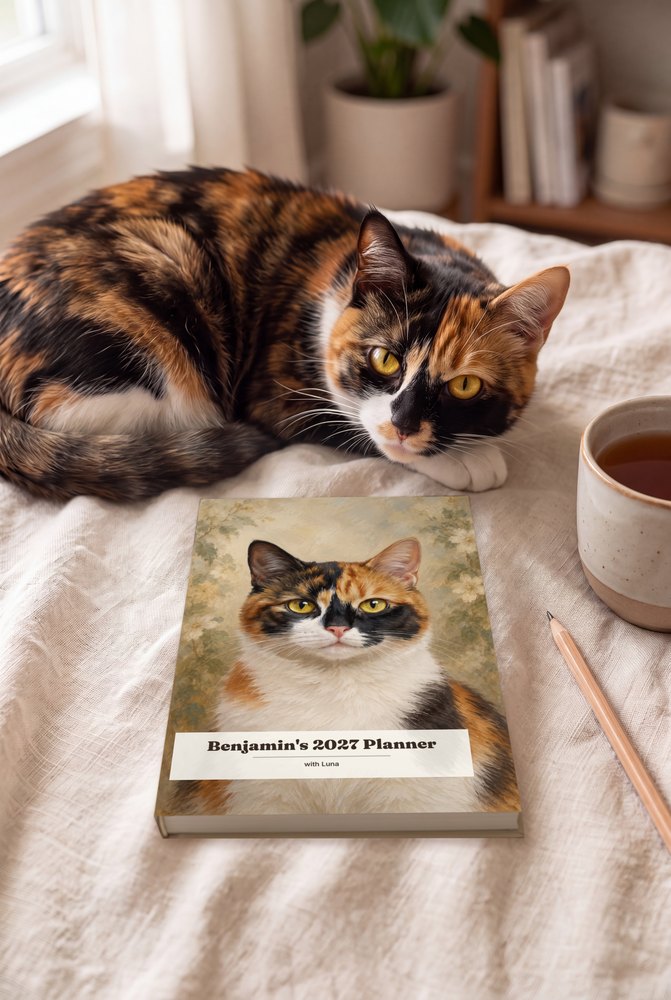
I’m Helen, cofounder of Plucky Pet. We make the personalized cat planner shown below.
I want one small part of your day to have its own space: deciding what belongs in it.
You open your phone to check an appointment. A message is waiting, so you answer it. Then you see something else worth a look. The place where you plan your time can also be the place that keeps asking for more of it.
A paper planner gives that moment a place away from the screen. You can sit with a pen, look across the week and choose what fits. You can leave an evening open, too.
Can a paper planner and a phone work together?
Yes. You can give each one a clear job.
A phone can alert you before an appointment or show a meeting time that someone changed. An open weekly spread gives you somewhere to consider those commitments together.
| When you want to… | One way to use your tools |
|---|---|
| See how the week fits together | Open the weekly spread before adding another task. |
| Remember an appointment at a set time | Keep a timed alert on your phone. |
| Choose what matters next | Write your priorities beside the time you have. |
| Review what changed | Mark the page and adjust the next plan. |
This is a suggested routine. The useful part is choosing when to look, what to record and what needs an alert.
Does seeing the whole week help you plan?
Picture an open book on the table. Monday’s appointment, Wednesday’s errand and Friday’s deadline have places beside one another.
Now you can ask where the next thing fits. A busy afternoon might leave room for one errand. A quieter morning might suit something that needs more time.
Huang, Yang and Morwitz compared paper and mobile calendars. Paper users made better plans and carried out more of them under the conditions studied.
The researchers linked that result to a broader view of how activities fit together. Encouraging mobile users to consider those relationships improved their plan quality, too.
That makes the overview worth paying attention to. The study does not establish that handwriting caused the result or that every paper planner beats every phone calendar.
What should you write in a paper planner?
Start with what already has a place: work, an appointment, travel or a meal. Then choose the next thing you want to make room for.
Perhaps there is a call you keep meaning to make. Give it a day and a time when you can make it. Leave space around it for the rest of the day.
Later, the page can hold what happened: a completed task, a changed plan or a note for next week.
Making a plan is deciding on an action. Recording progress lets you look back and adjust.
A review by Harkin and colleagues found that monitoring progress helped people work toward their goals. The effects were stronger when progress was recorded. Most of those studies concerned health goals. They support reviewing progress across tools, rather than a special power in handwriting.
The practical idea is modest: keep a record you can return to. Leave the book somewhere you can see it, and set aside time to check the page.
How does paper give you a moment away from your phone?
A page cannot display an incoming message or open a feed underneath your plans.
In an attention experiment by Stothart and colleagues, phone notifications disrupted performance even without people answering them. That finding comes from an attention task, not a test of paper planners.
The difference you can see on the page is straightforward: it generates no electronic alerts. While you write, the book gives you somewhere to put your plans.
When you come back, your plans are where you left them. You can change them at your own pace.
What makes a planner feel like yours?
For me, that personal space matters too.
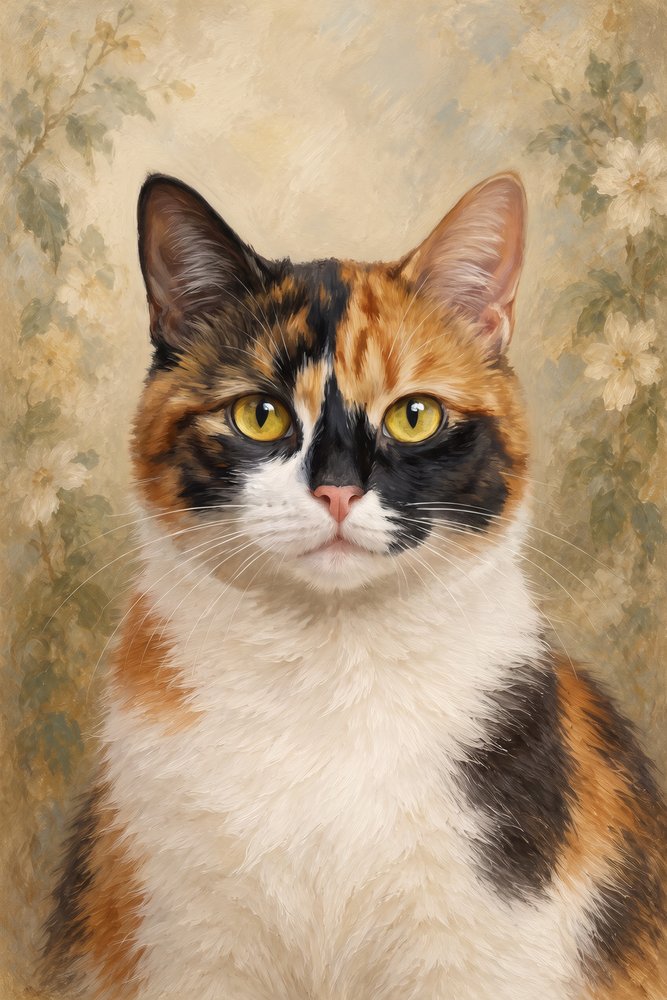
You might have a favorite photo of your cat: the crooked sleeping pose, the markings or that familiar expression. A planner can carry that face into an object you can hold and write in.
We make Your Cat’s Personalized Weekly Planner with six paintings created from your cat’s photo. One is on the cover, one opens the book and one appears for each season.
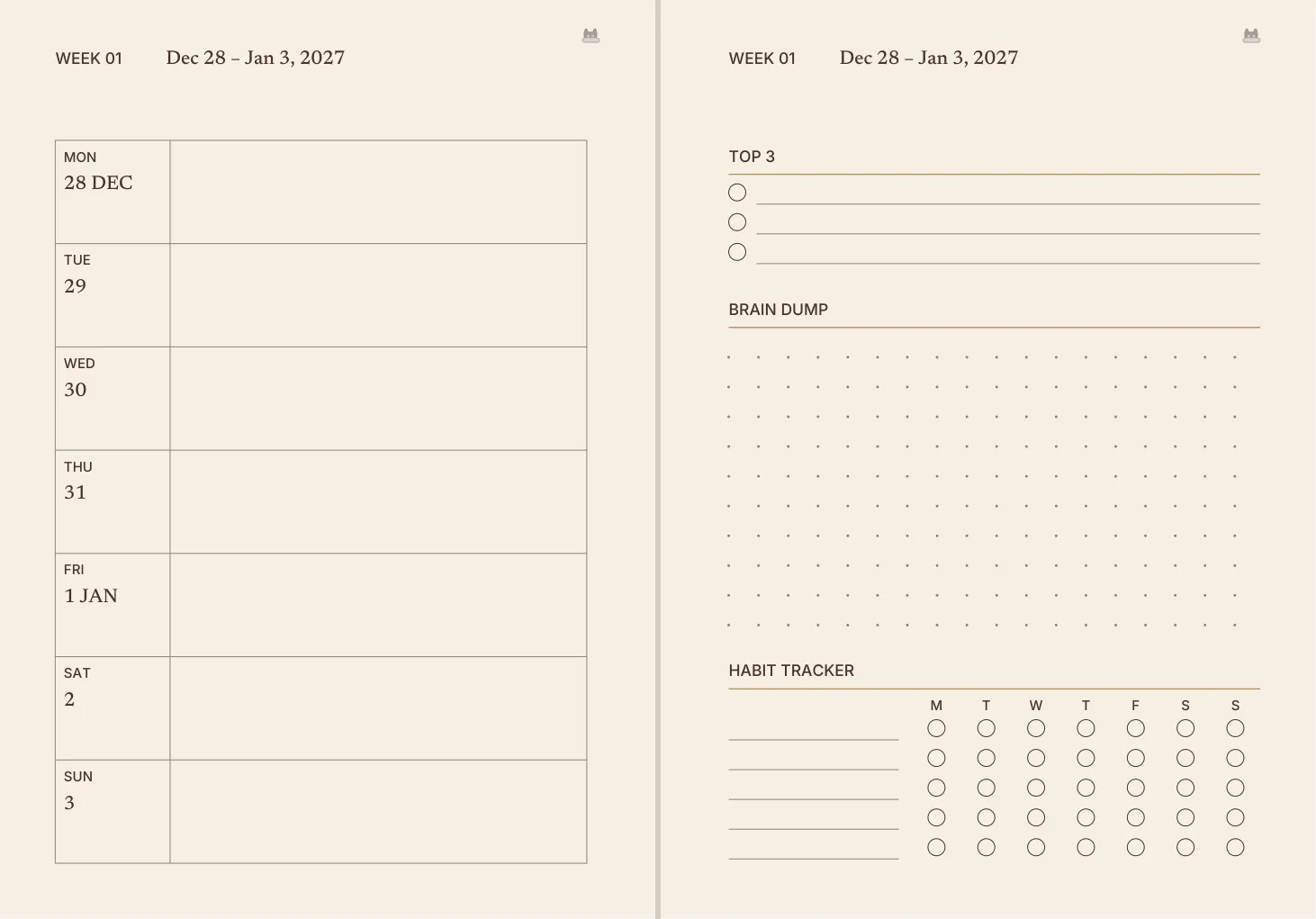
Your cat’s name goes on the cover. You can add your name too. Inside are dated weekly spreads, day blocks, a Top 3, notes space and a habit tracker.
The paintings are made with AI from your photo. You approve each final painting before we print.
Then you add your own handwriting. The dinner you want to arrange. A birthday to remember. An afternoon you decide to leave open.
Your cat makes the cover yours. What you write makes the weeks yours.
For me, that is a good reason to keep a little space on the table for paper.
Explore Your Cat’s Personalized Weekly Planner to see the pages and try a free cover preview. No email is needed to see the preview.